


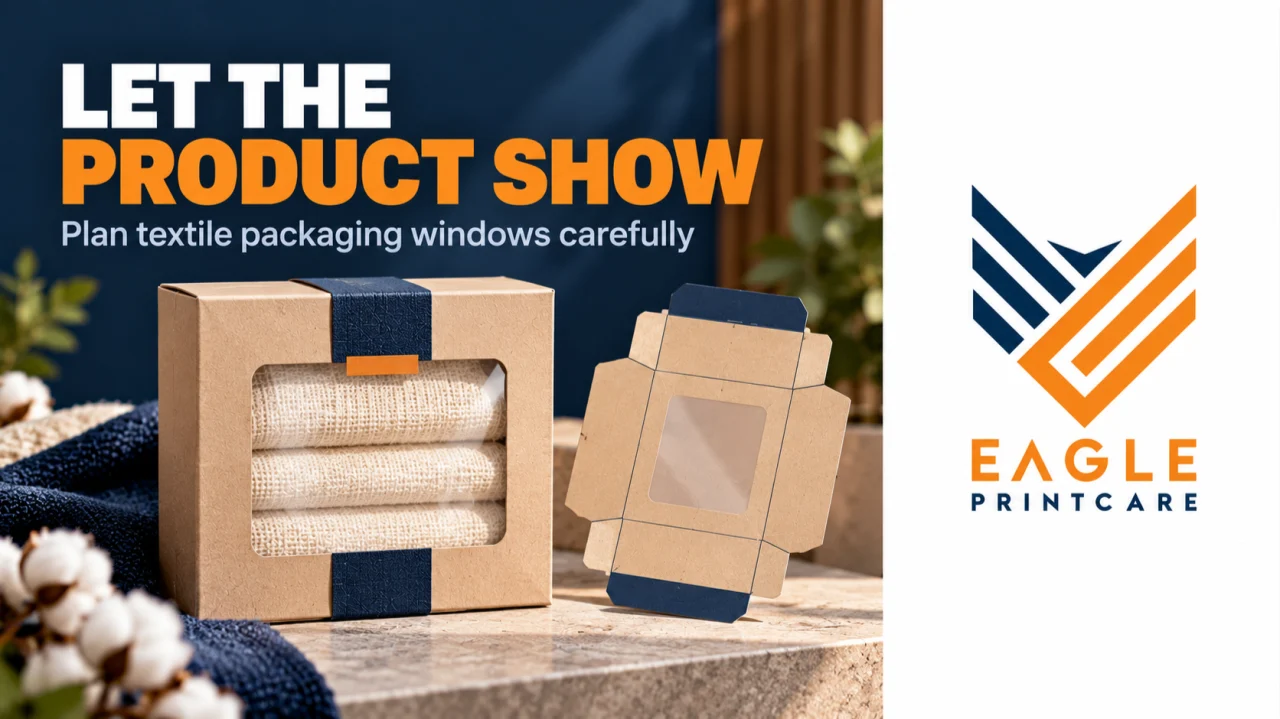
A customer picks up a bedsheet pack and wants to answer a simple question: “What does the fabric actually look like?” A window can help. It reveals a part of the product while the printed pack explains the size, contents and brand.
But cutting a larger opening is not automatically a better design. The window changes the available print area, the way the folded textile sits inside and the structure of the pack.
For home-textile brands, retailers and exporters, the useful design challenge is to balance visibility, presentation, handling and protection. This guide explains the decisions worth making before a window-packaging sample becomes a production order.
The short answer
A good textile-packaging window reveals a useful part of the product, keeps essential information readable and works with the pack's structure and folding method. Its size and position should be tested with the actual textile, not approved only on a flat artwork file.
Choose the window concept alongside the product fold, board specification, closure and intended handling conditions. If a transparent film is used, include that material and its attachment in the sample review.
The final design should survive ordinary use while making the product easier to understand. A visually attractive mock-up is a starting point, not proof that the pack is ready for production.
1. Decide what the customer needs to see
A window should answer a product question. Is the important feature the colour, weave, embroidery, print or border? Different textiles may need different views.
For a plain towel, texture and colour might be most useful. For a patterned bedsheet, a small opening may show an unrepresentative patch. For a curtain, the visible area should be considered alongside information about size and the intended appearance when used.
Do not assume that showing more fabric always communicates more. A carefully positioned opening can be clearer than a large window that reveals an untidy fold or an irrelevant section.
Write the visibility objective in the brief. “Show the border detail without opening the pack” gives the design team a more useful target than “make it premium.”
2. Design the fold and window together
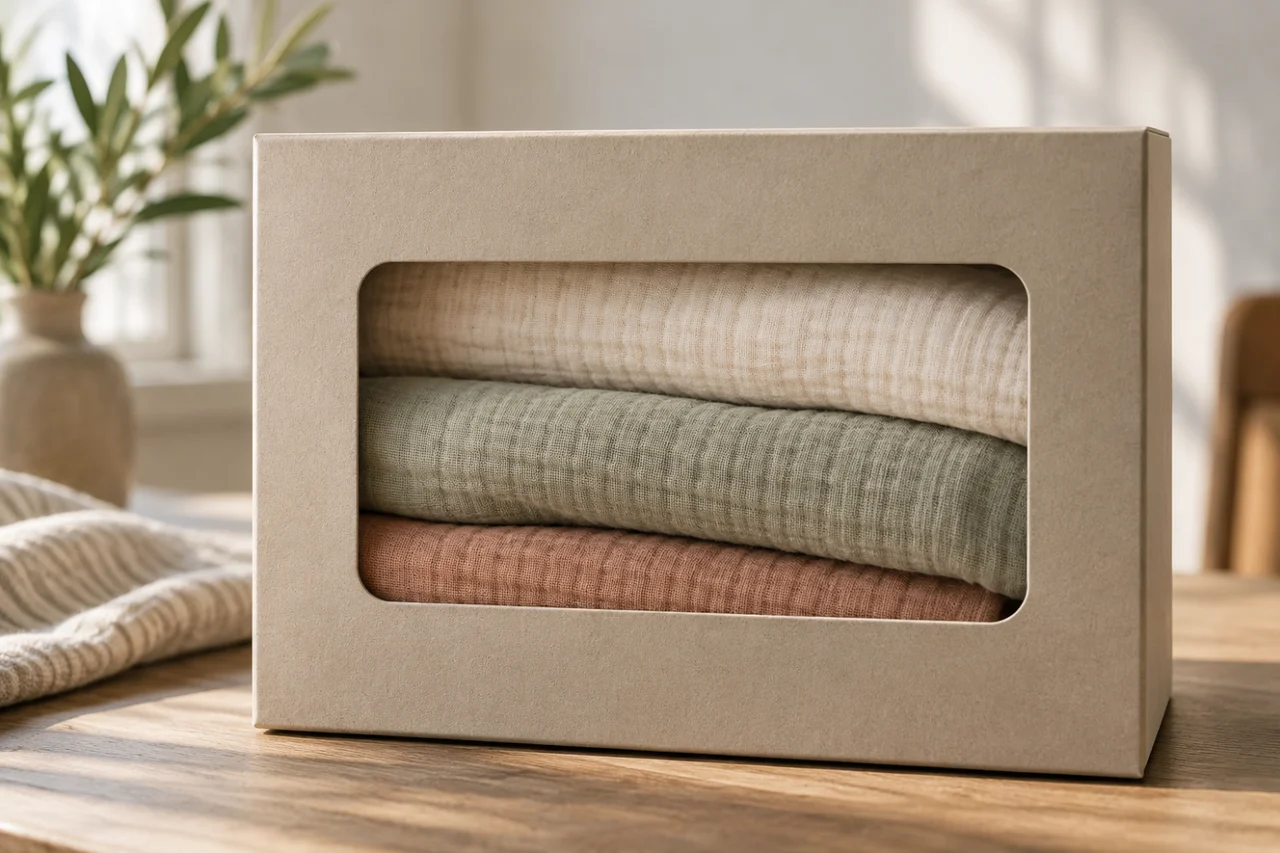
The textile's position determines what appears in the opening. A window approved with one carefully arranged sample may look different when the production team folds hundreds of units.
Agree on the fold direction, visible face and insertion orientation. Consider whether the product can shift during handling and whether that movement changes the view.
If several sizes or variants use the same packaging concept, test each relevant combination. A thicker textile may fill the pack differently from a lighter one, and a pattern repeat may land in a different position.
A simple packing instruction can help keep the result consistent. It should show the intended orientation clearly enough for the packing team to reproduce, rather than depend on the designer being present.
3. Keep the remaining structure purposeful
An opening removes material from the panel. Its shape, size and proximity to folds or edges therefore matter to the pack's behaviour.
Avoid choosing a window from appearance alone and asking the production team to make it work afterwards. Discuss the remaining borders, panel stiffness, closure and handling requirements while developing the concept.
A narrow bridge of material may look elegant on screen but behave poorly when the pack is filled or handled. Sharp internal corners and intricate shapes can also introduce manufacturing and durability considerations that should be reviewed with the converter.
There is no universal safe window size for every pack. Board, construction, product weight and distribution conditions all influence the appropriate design. Use a physical sample and agreed tests rather than a generic percentage rule.
4. Decide whether the opening needs a film
Some concepts use a transparent film over the opening; others use a different presentation arrangement. The choice affects visibility, product contact, dust protection, appearance and material composition.
If a film is used, discuss its clarity, compatibility with the pack and the method of attachment. Review the filled sample for wrinkles, loose areas and other visible or functional concerns.
Do not assume a window makes the whole pack dustproof, waterproof or tamper-proof. Any such claim needs to be supported by the actual design and relevant evidence.
Similarly, do not describe a mixed-material pack as universally recyclable without considering its materials, separability and the collection systems in the intended market. Environmental wording should match the evidence, not simply the appearance of a paper-based outer pack.
5. Protect the information hierarchy
A window competes with printed information for space. The customer still needs to understand what is included, the product size, variant and other required details.
Place information according to how the pack will be displayed and handled. A front-facing retail pack and a pack stacked flat may need different priorities.
Keep critical text away from areas where folds, seams or the window make it difficult to read. Check the actual print size rather than judging legibility from an enlarged screen view.
Coordinate product naming and colour or design identifiers with the brand's wider range. A window can reveal the textile, but it should not force the customer or retailer to guess which SKU they are holding.

6. Review the pack under realistic viewing conditions
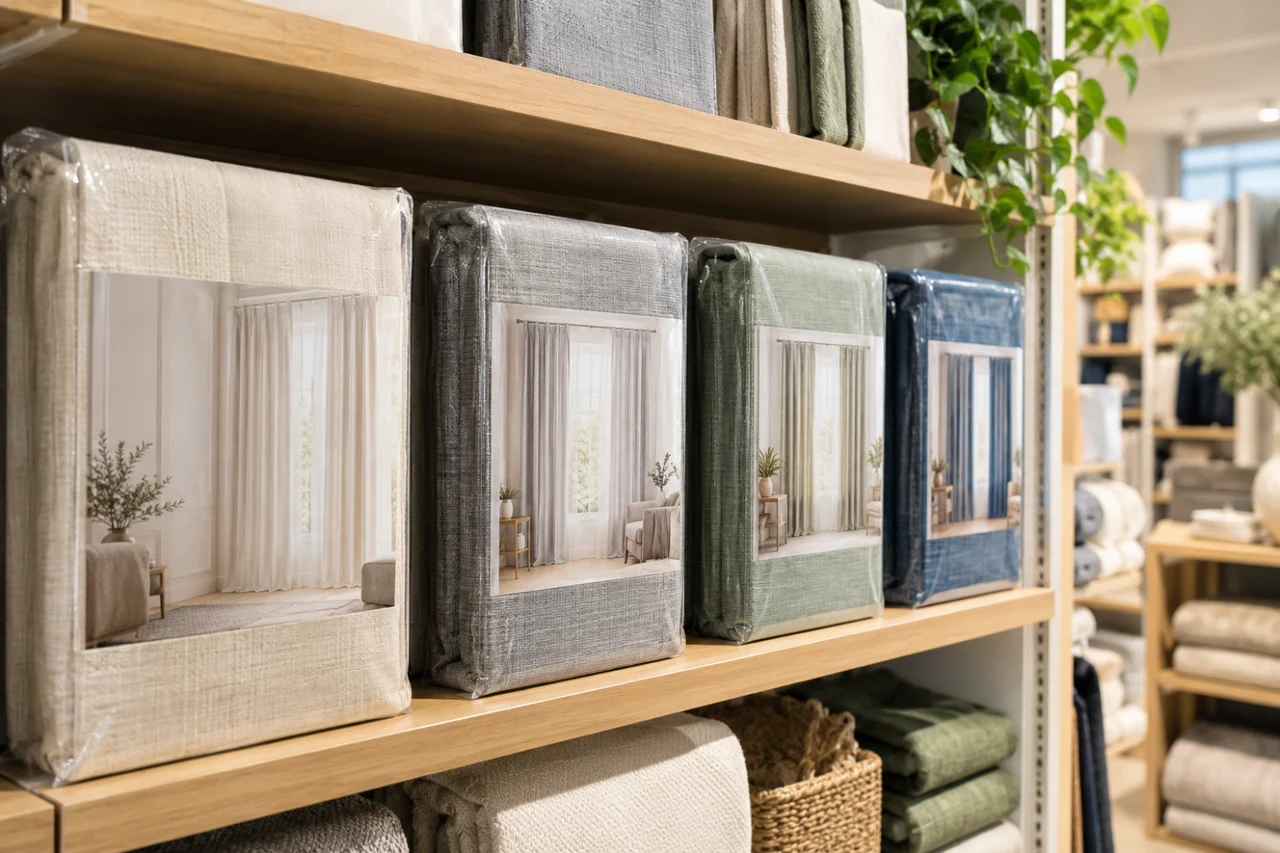
A sample photographed under studio lighting can look very different on a retail shelf. View the filled pack at ordinary distance and under the lighting conditions relevant to its use.
Check whether the window creates distracting reflections, whether the fabric remains visible and whether the printed information is easy to read. Compare the pack upright, flat and alongside neighbouring variants where appropriate.
The visible textile colour may appear different through a film or under different lighting. Avoid treating a photograph of the pack as a definitive colour standard.
For colour-critical approval, agree on suitable physical references and the approval process with the print and production team. The packaging should support accurate presentation without promising that every viewing environment will look identical.
The window should reveal the product, while the rest of the pack explains the purchase.
Editorial design takeaway, not a customer quotation.
7. A fictional example: the patterned bedsheet range
Consider a home-textile brand preparing a new patterned bedsheet range. Its first concept uses a large central window because the team wants the design to be visible.
When the actual products are folded and inserted, some packs show the main motif while others show only the background colour. The window also leaves little space for a clear size label.
The team revises the fold instruction and tests a different window position. It checks the relevant variants rather than approving only the most attractive sample.
The final review includes the filled pack, the printed size information and normal handling by the packing team. The brand documents the approved arrangement so production does not depend on memory.
This is an illustrative design case, not an Eagle Print Care customer result. It shows why the textile, fold, artwork and structure need to be reviewed together. No sales increase or damage-reduction figure is claimed.
8. Include packing efficiency in the sample review
A pack may look excellent but take too long to fill consistently. Ask the people doing the packing to test the proposed design.
Can they identify the correct orientation quickly? Does the textile catch on an edge? Does the closure work without forcing the product? Can they achieve the approved appearance using the intended process?
If the design needs an additional insert or support, include it in the cost and handling discussion. An unplanned component introduced late can change both the production method and the material specification.
Record the approved sample and its revision. If a dimension, film or closure changes afterwards, determine whether another review is needed. Small changes can affect how the finished pack behaves.
9. Separate retail presentation from transport protection
A window pack intended to look good on a shelf may still need an appropriate outer transport arrangement. Do not assume the retail pack alone is suitable for every shipping route.
Consider how units are grouped, stacked, moved and unpacked. The distribution environment should inform the complete packaging system, including any outer protection.
For exporters, requirements may also come from the buyer, retailer or destination market. Confirm those requirements through the responsible parties rather than applying a generic domestic retail design unchanged.
The useful question is not “Is this pack strong?” in isolation. It is “Does this complete packaging arrangement meet the agreed handling and presentation requirements for this product and route?”
10. Prepare a clear enquiry for the packaging supplier
Provide an actual textile sample or reliable product dimensions, the proposed fold, weight and intended quantity. Explain where the pack will be sold and how it will travel.
Share the visibility objective, required printed information and any buyer specifications. If the same design must serve several variants, identify them early.
Ask for the proposed material and construction details, sample process and approval responsibilities. Clarify which tests or checks will be used before production and who will sign off the filled pack.
Keep the final approved artwork and physical sample linked to the production order. This gives everyone a common reference when discussing a later change or quality question.
Frequently asked questions
Is a larger window always better for textile packaging?
No. The opening should reveal a useful feature while preserving the required structure, information and presentation. Test the actual filled pack.
Can one window design work for every product size?
Sometimes, but it should be checked. Different folds, thicknesses and pattern positions can change the result.
Does a transparent film make the pack waterproof?
Do not assume so. Protection claims need evidence for the complete construction, including seams, closures and other openings.
Should the artwork be approved before the sample?
Artwork and structure should be developed together. Final approval should consider the printed, filled sample and the intended packing method.
Make visibility part of a complete design
Eagle Print Care's official website presents its textile-packaging and print capabilities. For a practical project discussion, bring the product, folding requirement and intended retail presentation—not just a reference image.
A well-planned window gives customers a useful view while the rest of the pack does its job. That balance is achieved through clear specifications, physical samples and a repeatable packing process.